/filters:quality(80)/prod01/channel_2/media/site-assets/images/ug-2025/biomed4.jpg)
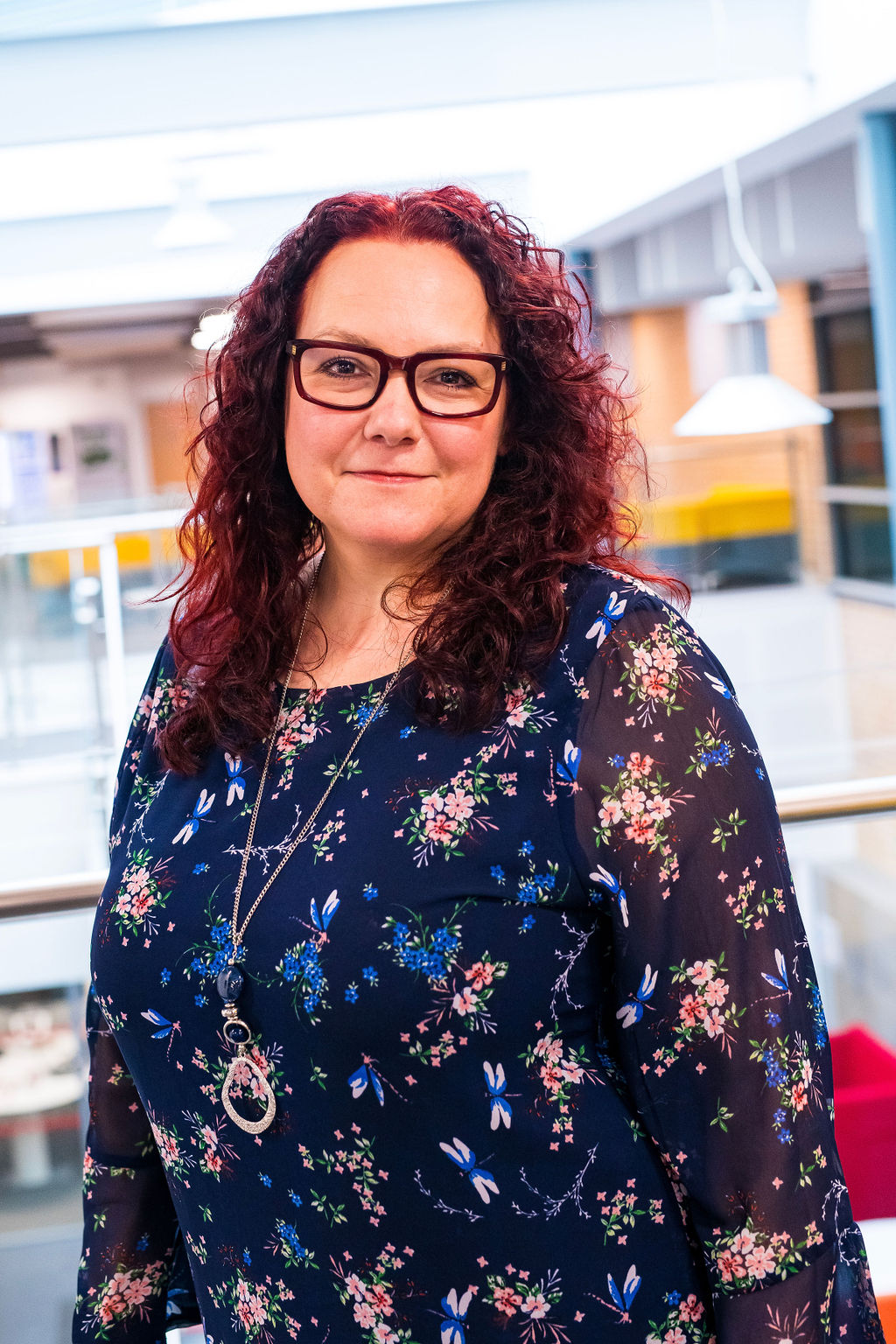
I am a Molecular and Cellular Biologist/Biochemist specialising in Thrombosis and Haemostasis and Programme Lead for Biomedical Science here at Leeds Trinity University. I have a passion for medical science and feel privileged to be able to explore and investigate new biological phenomena, whilst teaching the next generation of medical scientists. We look forward to welcoming you to Leeds Trinity in September.
Explore where you'll be studying
You'll study at our Main Campus in Horsforth. Set within a beautiful green space and situated six miles northwest of Leeds city centre, our Main Campus is home to a range of specialist facilities and is the social and historic hub of life at Leeds Trinity.
/filters:quality(80)/prod01/channel_2/media/site-assets/images/ug-2025/LeedsTrinity_Externals_005-smaller.jpg)
Make more happen with our specialist facilities
Our Biomedical Science degrees include access to outstanding teaching equipment and facilities.
Our Biomedical Science facilities include:
- A teaching laboratory, filled with brand-new specialist scientific equipment
- 2 class II safety cabinets
- A fluorescent microplate reader
- Thermal cyclers
- A fluorescent inverted microscope
- Premium gel documentation systems, alongside a range of gel electrophoresis machines
- Centrifuge and incubator equipment.
This collection of instruments will allow students to gain the key laboratory skills required to prepare for roles as lab-based or non-lab-based scientists. Our laboratory also features provisions for students with accessibility requirements, such as a specially designed height-adjustable benchtop and sink, as well as a designated area conducive to teaching and collaborative group work.
/filters:quality(80)/prod01/channel_2/media/site-assets/images/school-facilities/LTU25-BioMed-0445.jpg)
Biomedical Science lab
/filters:quality(80)/prod01/channel_2/media/site-assets/images/school-facilities/LTU25-BioMed-0274.jpg)
Working in a class II safety cabinet performing cell passage
/filters:quality(80)/prod01/channel_2/media/site-assets/images/school-facilities/LTU25-BioMed-0453.jpg)
Gel documentation units and inverted microscope, with incubator at the far right
/filters:quality(80)/prod01/channel_2/media/site-assets/images/school-facilities/LTU25-BioMed-0476.jpg)
Manual pipette (Gilson) carousel
/filters:quality(80)/prod01/channel_2/media/site-assets/images/school-facilities/LTU25-BioMed-0193.jpg)
Loading a carousel into a spectrophotometer
/filters:quality(80)/prod01/channel_2/media/site-assets/images/school-facilities/LTU25-BioMed-0233.jpg)
Pipetting into cuvettes
Join the conversation on Unibuddy
As a Leeds Trinity offer-holder, you’re invited to join our private Undergraduate Community on Unibuddy. Our Community is a place for you to meet other offer-holders, make friends and start planning your life at LTU.
You should have received your invitation to join the Community via email. If you can’t find yours, please email hello@leedstrinity.ac.uk.
You can also use Unibuddy to chat with our academics about any course-specific enquiries or ask our students about what you can expect when you study at Leeds Trinity.
/filters:quality(80)/prod01/channel_2/media/site-assets/images/ug-2025/01162024JSP_LTU_01-0647-smaller.jpg)