
Centre for Addiction Recovery Research
About the Centre for Addiction Recovery Research
The Centre for Addiction Recovery Research (CARR) is the first European research centre to focus on addiction recovery.
The aim of the centre is to advance research in the area of recovery and recovery capital, using a range of innovative methods and collaborations to produce applied knowledge.
CARR aims to be a hub for local, national and international partnerships in the area of addiction recovery research and scholarship.
The strategic objectives of CARR are:
- To be the leading research centre in the area of addiction recovery in the UK and Europe.
- To advance science around recovery and recovery capital.
- To be the global leader in applied research in the area of recovery capital, building on the success of a number of established measurement tools.
- To increase the evidence-base and policy impact of research.
- To be a global leader in teaching and dissemination around recovery and recovery capital and to develop accessible and credible courses to build capacity in this area.
- To be the hub for a series of applied and academic partnerships that will build and promote the centre.
Our current work
The Centre has been working with Recovery Connections, a charity based in Middlesbrough, to develop effective recovery models, focusing on celebrating recovery and challenging stigma, supporting people in recovery to rejoin society and rediscover their self-worth.
This is done through the Inclusive Recovery Cities (IRC) model, which invites cities to make recovery a valued part of civic life through collaboration between people with lived experience, local authorities, employers, services, and community organisations.
Supported by Innovate UK through a Knowledge Transfer Partnership and an Accelerated Knowledge Transfer project secured by Leeds Trinity in 2025, the IRC model has shown promising results across the North of England and is now expanding, with the total number of Inclusive Recovery Cities in the country projected to reach 30 by the end of the year.
The College of Lived Experience Recovery Organisations
The College of Lived Experience Recovery Organisations (CLERO) provides support and training which includes the opportunity for Lived Experience Recovery Organisations to develop expertise in Peer Research.
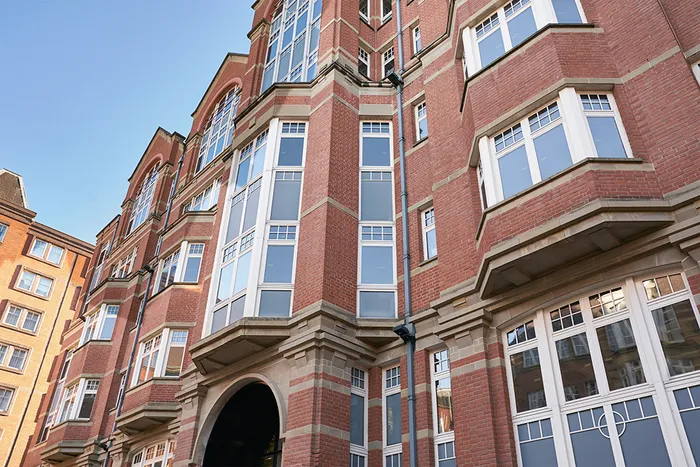
Inclusive Cities
Inclusive Cities is an organisation that works to build Inclusive Cities for people in recovery from addiction.

International work in recovery
Our research programme has focused on creating a body of evidence on recovery capital, recovery housing, and recovery-oriented systems of care, spanning the UK, Europe, and North America. CARR’s interest with partners including the development of innovative longitudinal analyses, causal inference methods, and quasi-experimental designs, this work has advanced understanding of how social and community resources shape recovery trajectories, particularly among justice-involved populations and those facing multiple disadvantages. Recent studies have explored the impact of medications for opioid use disorder on recovery capital trajectories.
Current research extends this agenda through collaborations with Drug Treatment Courts, exploring pathways between recovery and community reintegration, alongside the development of a novel wellbeing measurement tool for the peer workforce to better understand, support, and sustain this critical component of the recovery ecosystem. Ongoing work is aiming to explore the ‘architecture’ underpinning recovery capital (how an individual’s recovery capital alters through their recovery journey).
We also have published several papers focused on our international and UK work (papers this year to date):
Sondhi, A., Best, D., Leidi, A., Belanger, M., Best, J., Bunaciu, A., & White, W. (2026). The impact of medications for opioid use disorder (MOUD) on retention and recovery capital in recovery housing: An exploratory causal inference analysis. International Journal of Drug Policy, 151, 105218. https://www.sciencedirect.com/science/article/pii/S0955395926000708
Belanger, M. J., Lebeck, K. D., Bunaciu, A., Sondhi, A., & Best, D. W. (2026). Baseline recovery capital and substance use history as determinants of recovery residence length of stay examined through cox regression and survival mixture clustering. Journal of substance use and addiction treatment, 210067. https://www.sciencedirect.com/science/article/pii/S2949875926001876